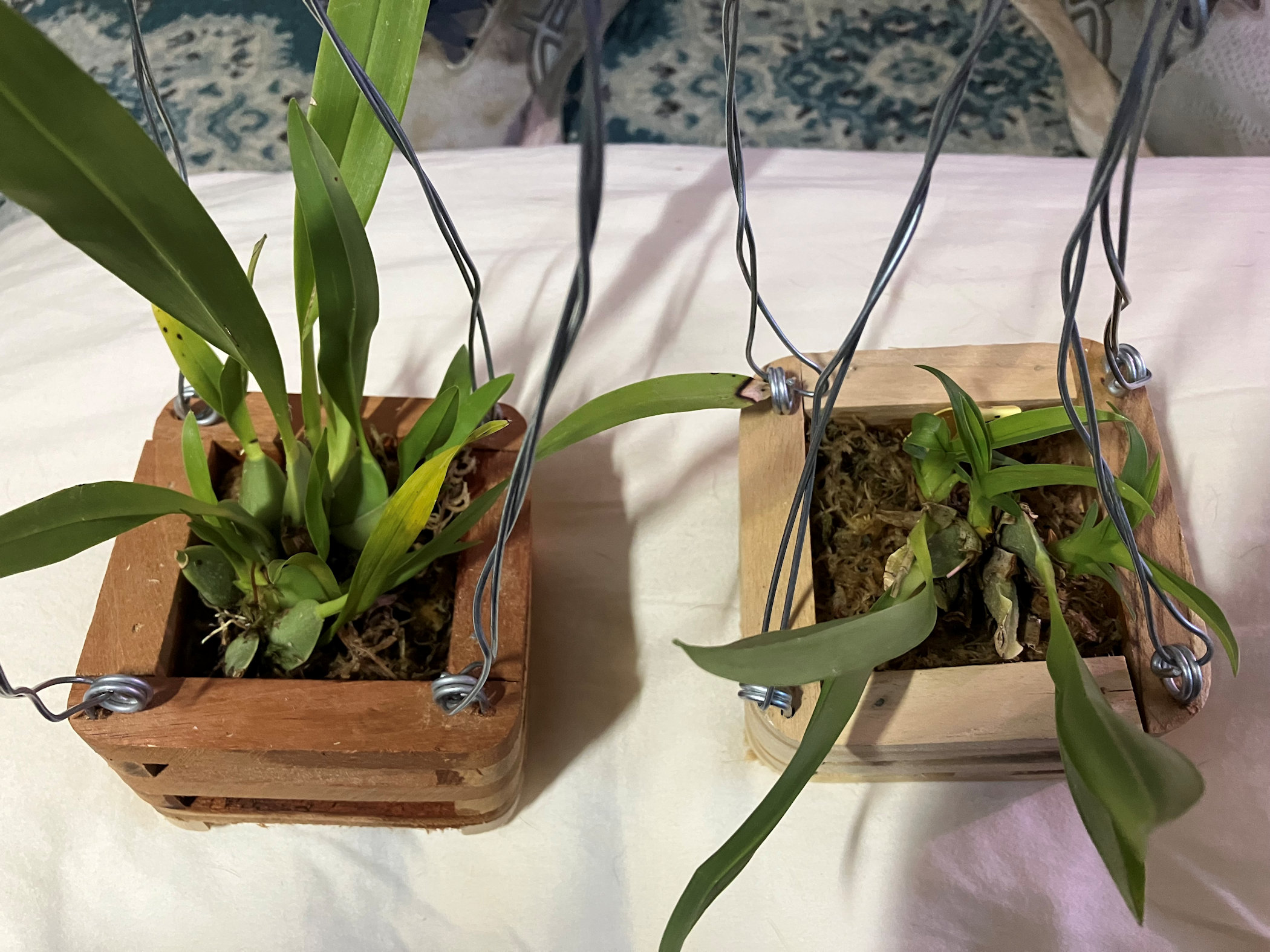
| Oncidium: Water them to keep the medium moist but not soggy, checking for dryness before watering again.
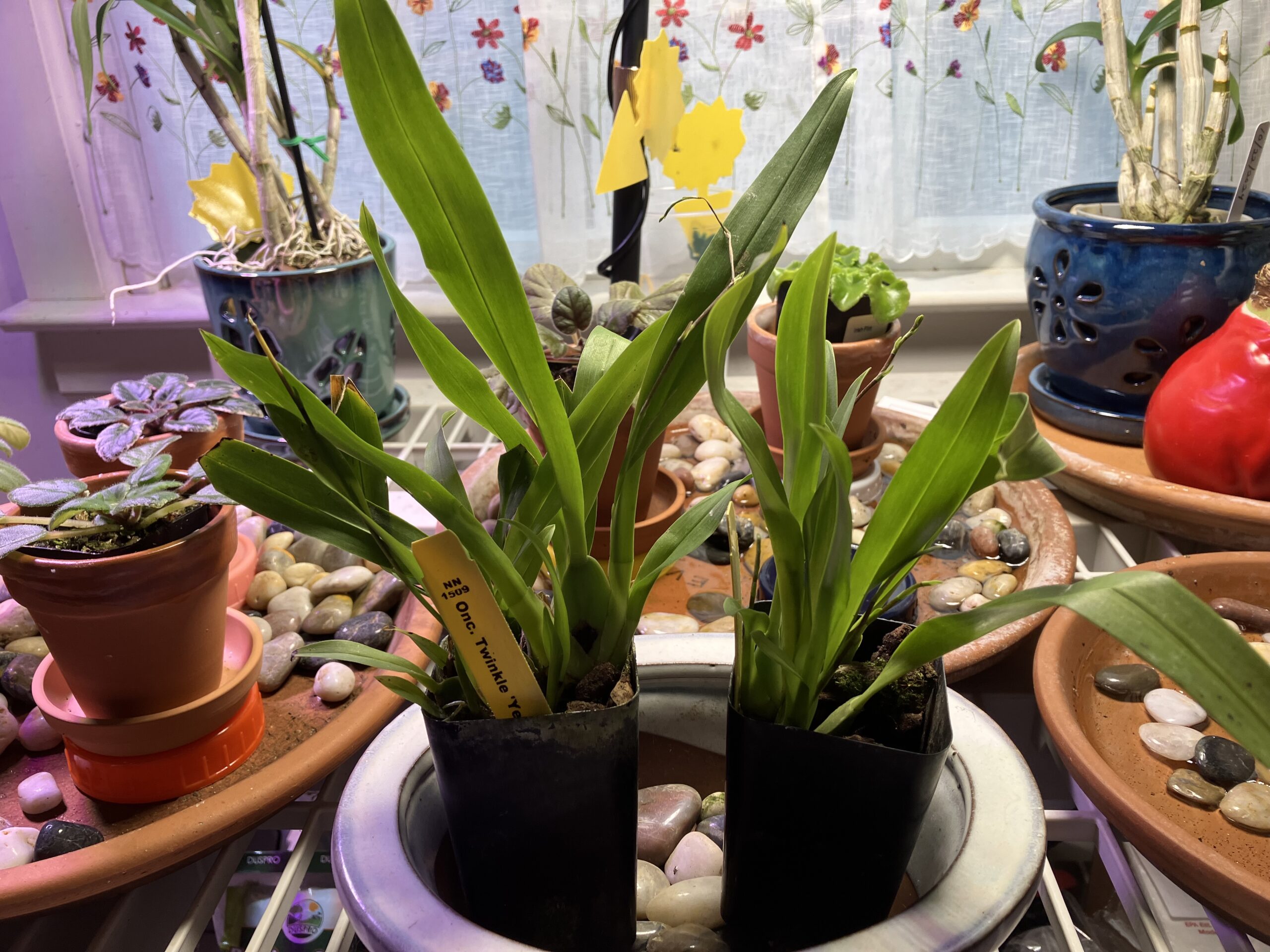
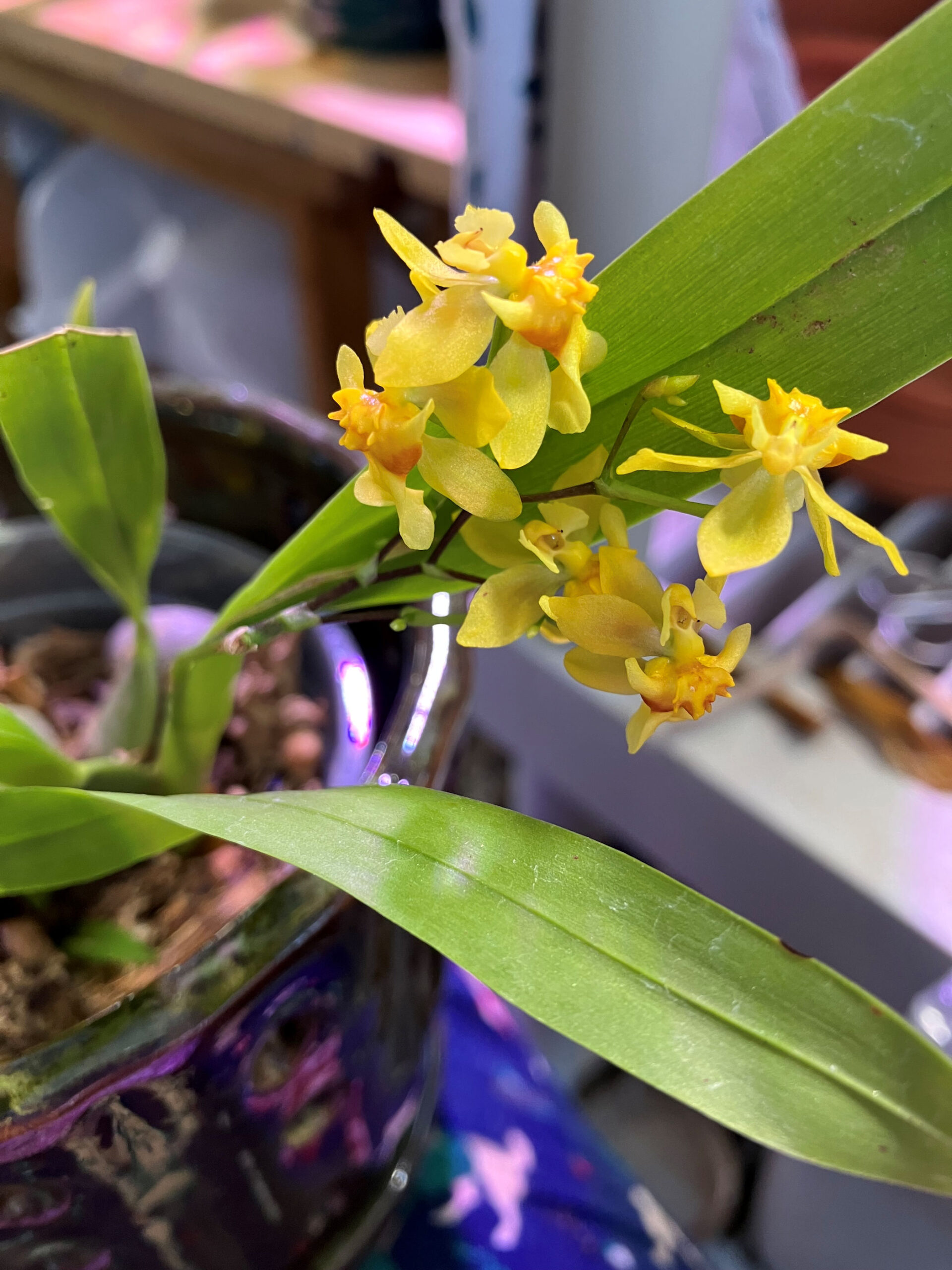
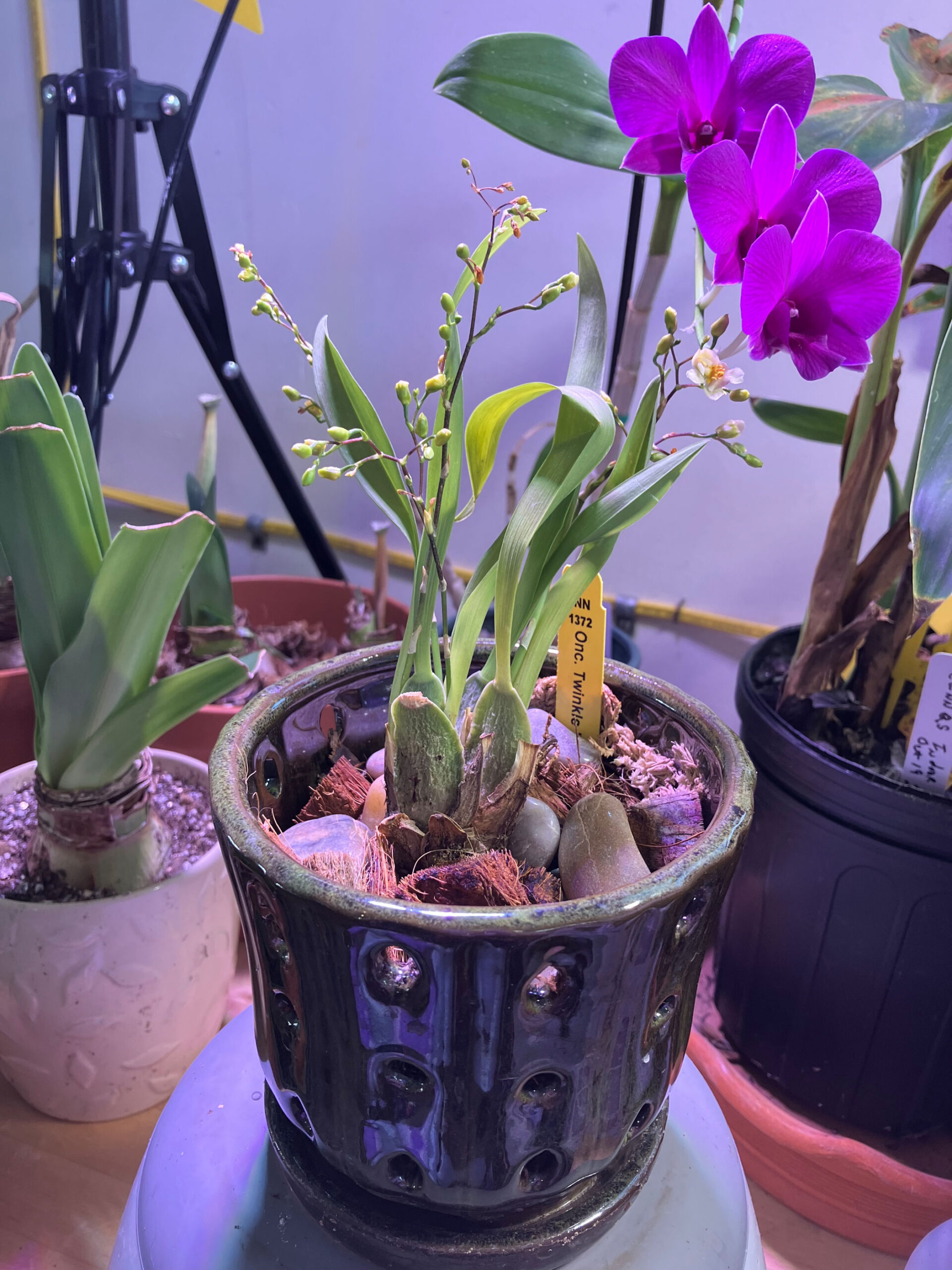
Provide bright, indirect light, such as from an east or west-facing window with a sheer curtain, and maintain a warm environment (70-85°F day, 60-65°F night) with high humidity (40-75%) using a pebble tray or humidifier. Water them to keep the medium moist but not soggy, checking for dryness before watering again. Use a bark-based potting mix, and fertilize during active growth with a balanced or high-nitrogen formula. Finally, repot when new roots are forming on new growths to ensure the plant has room to develop. To care for Oncidium orchids, provide bright, indirect light and consistent moisture, allowing the potting mix to dry halfway between waterings, and aim for 30-60% humidity, watering more for thinner leaves and less for thicker ones, using bark/moss mix and repotting when new roots emerge. Avoid scorching: by keeping them out of intense, direct midday sun. Leaf color is a good indicator: Reddish/purplish tones mean too much sun, while dark green can mean too little. Fertilize regularly during growth, reducing it when blooming. Miniature Oncidiums, the most popular being Oncidium Twinkle, have a remarkable number of flowers for such a small plant. Miniature Oncidiums prefer to be in a small, tight pot and will dry out very quickly. It is a bit of a challenge keeping these little guys moist enough. Still, they are relatively easy to grow and have a generous bloom. Unlike standard Oncidiums, the miniature varieties are less likely to attempt to grow up and out of the pot. To grow an Oncidium on cork bark, first prepare the orchid by rinsing and cleaning its roots, then mount it to the cork bark using fishing line or raffia, potentially with a small amount of sphagnum moss to retain moisture for the roots. Position the orchid with the new growth facing the mount to encourage root attachment and provide the plant with the humidity and light it needs, watering frequently by misting or dunking the mount. |
| Fall 2025:
|
|

|
|
|
|
Dendrobium: Water thoroughly when the potting mix starts to dry, but avoid waterlogged conditions.
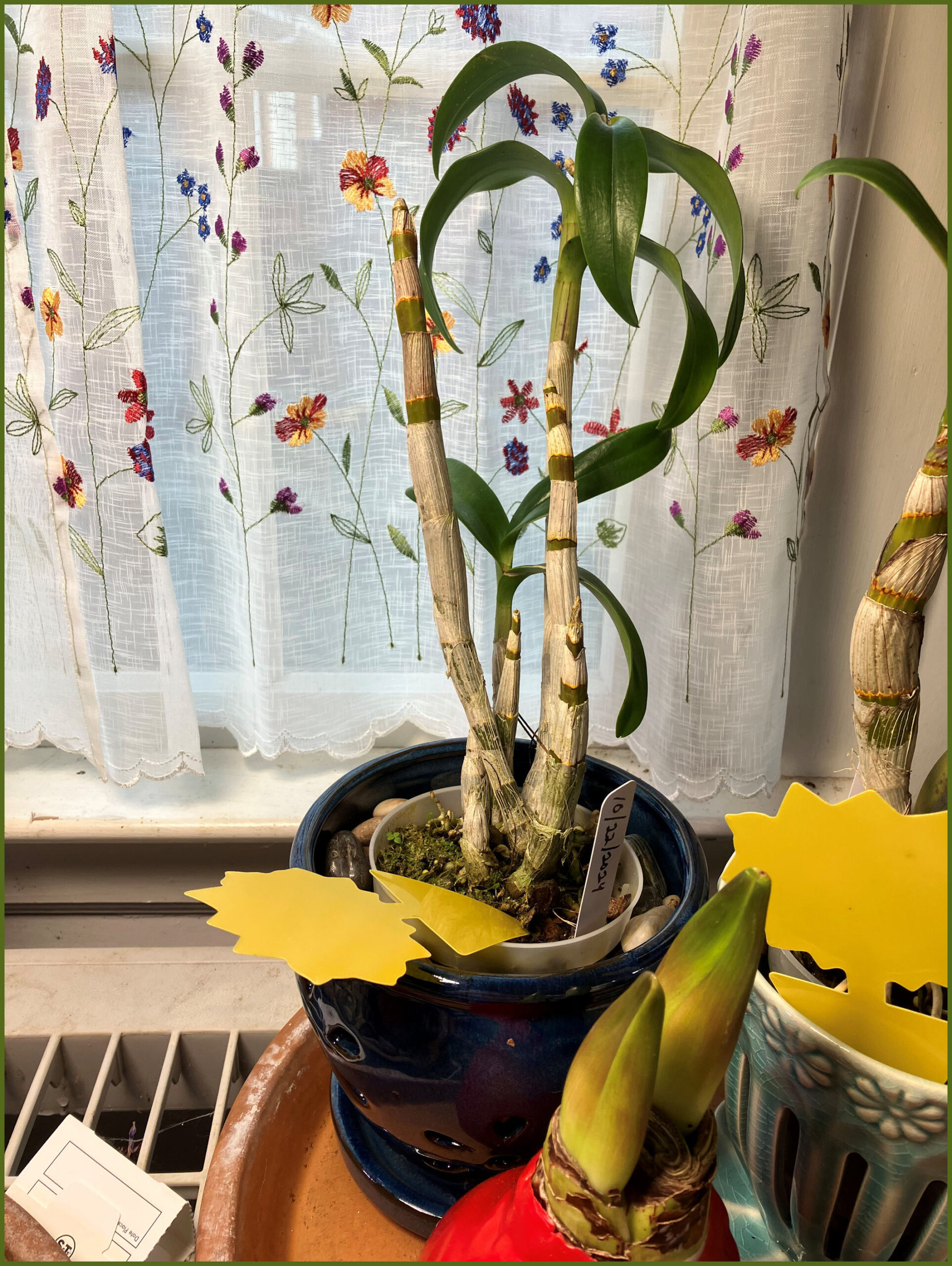
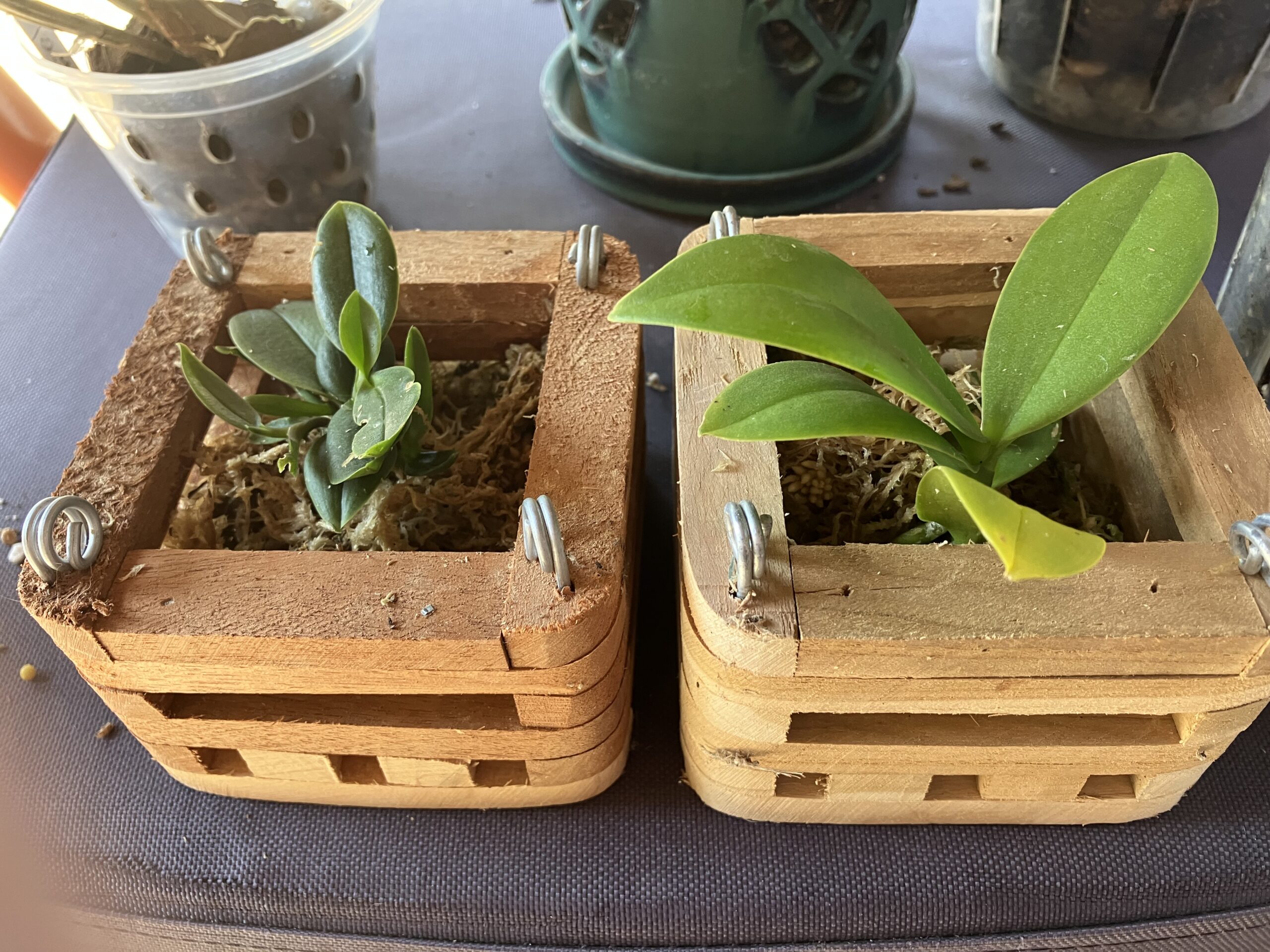
To grow Dendrobium orchids, provide bright, filtered light, typically from an east-facing window, with protection from harsh afternoon sun. Water thoroughly when the potting mix starts to dry, but avoid waterlogged conditions, as Dendrobiums prefer excellent drainage and free-draining mixes. Feed with a balanced orchid fertilizer during the growing season and reduce watering and fertilizer in winter to encourage flowering. To grow a Dendrobium on cork bark, clean and trim the orchid’s roots, then soak the cork to make it pliable. Position the orchid on the cork, covering the roots with a small amount of damp sphagnum moss to retain moisture. Secure the orchid to the cork using fishing line, soft plant wire, or twine, ensuring a snug fit without constricting the roots. Hang the mounted orchid in a suitable location with good air circulation, bright filtered light, and appropriate temperature and humidity for your specific Dendrobium species. |
| Fall 2025:
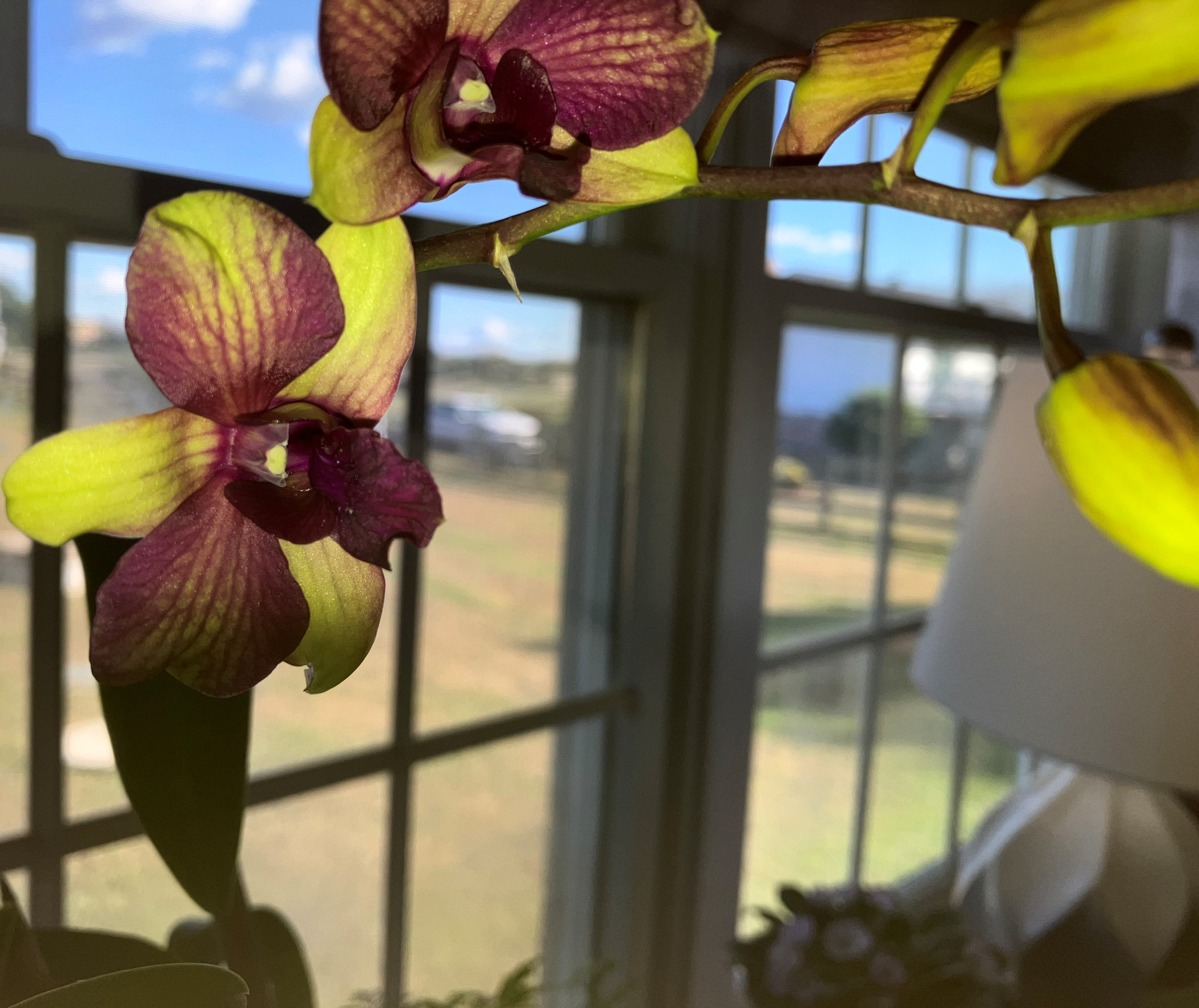
Orchid 001, King Den Orchid: 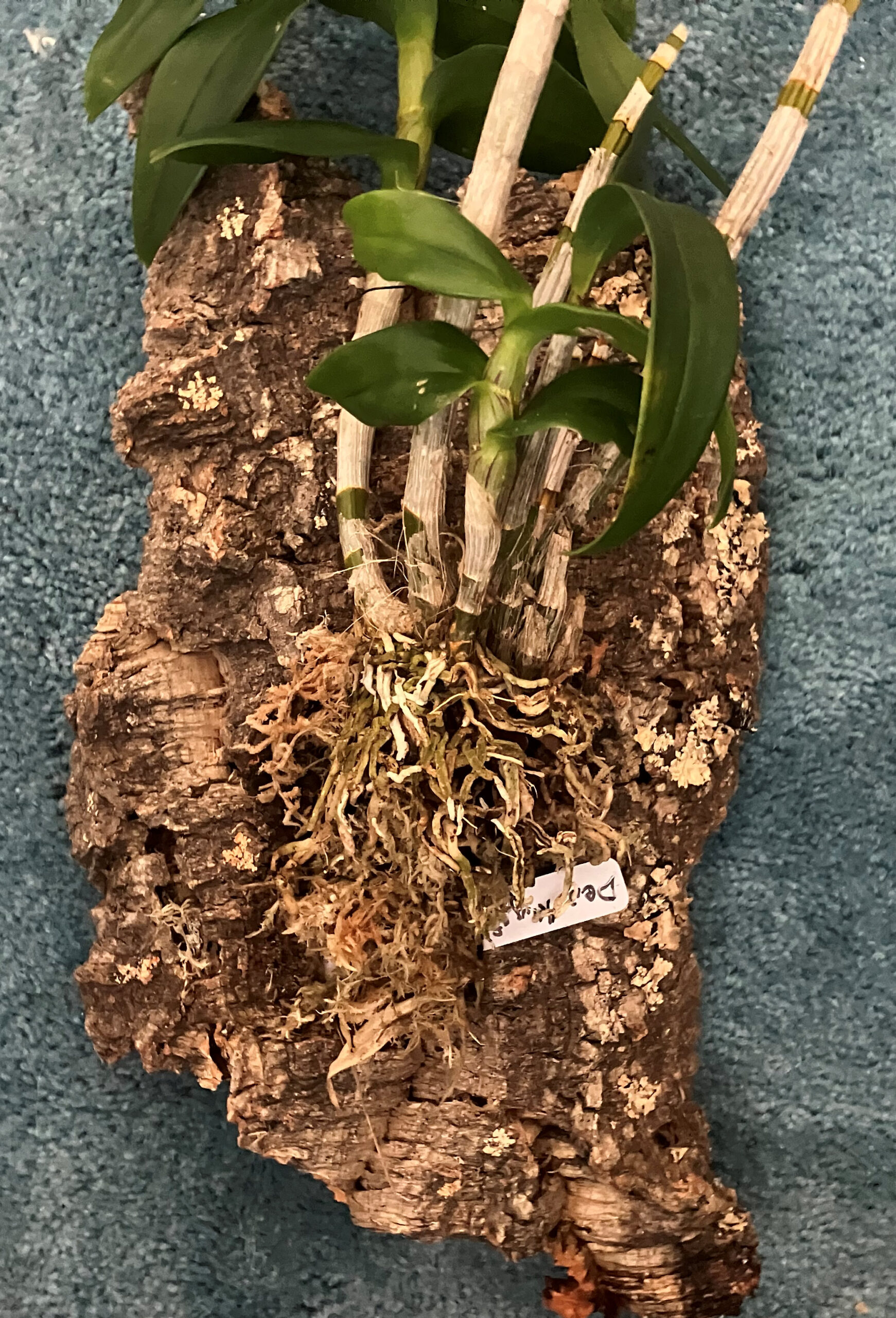 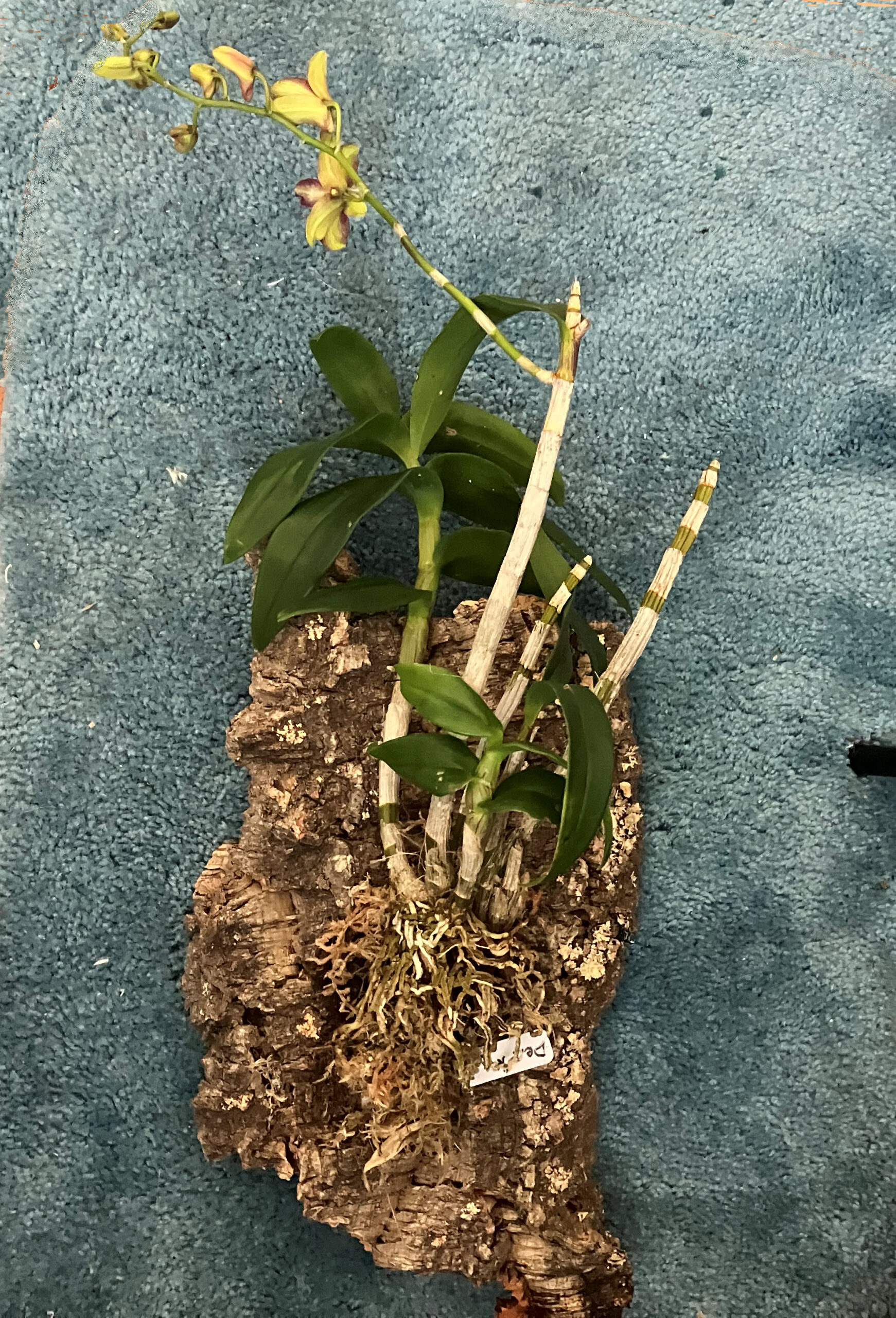
|
| Winter 2024-2025:
|
|
|
|
|
|
|
|
|
|
|



Phalaenopsis:
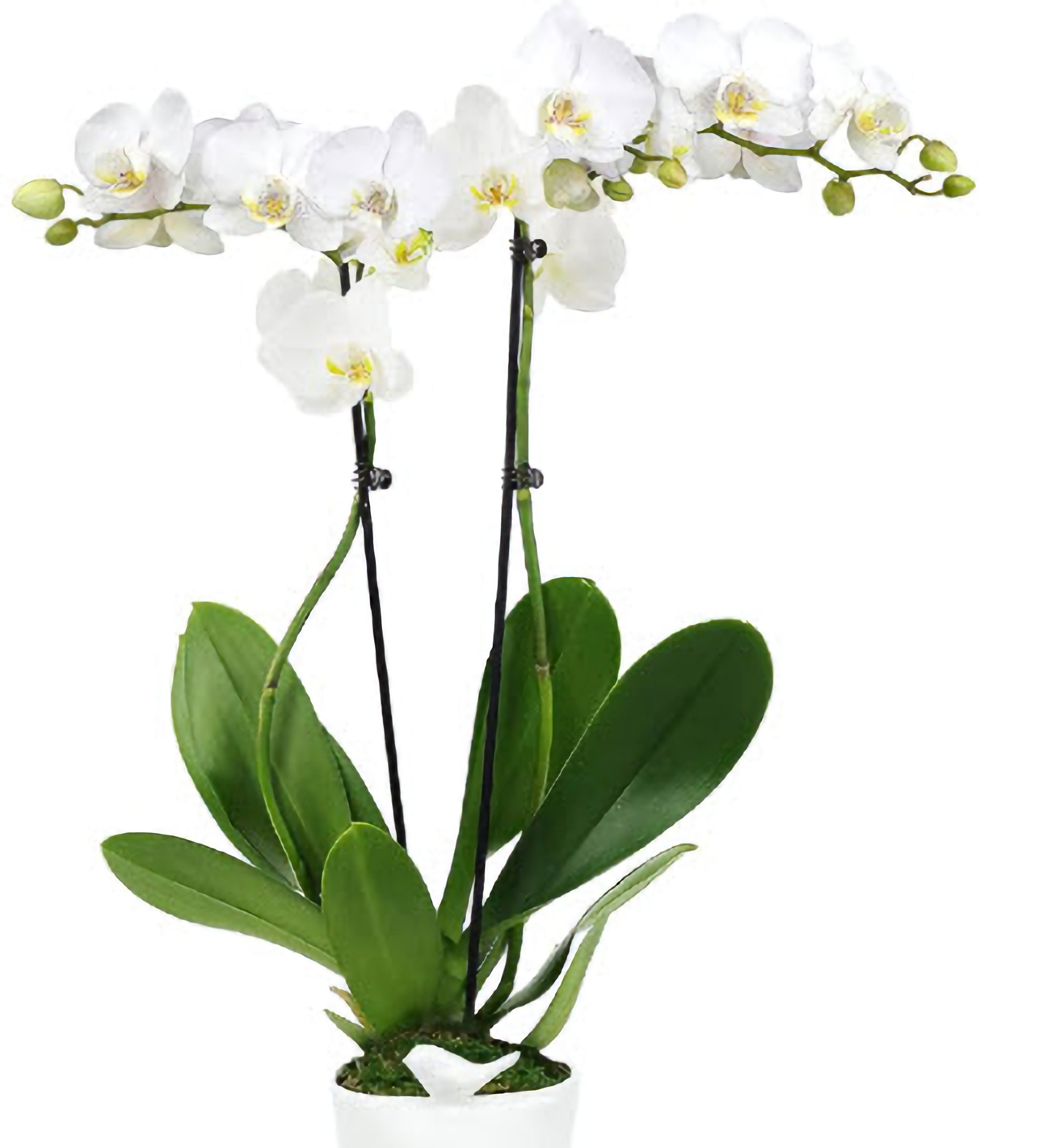 Water when medium is dry. The Moth orchid is the most common orchid due to its ease of production and the ability to force it to bloom year-round. Phalaenopsis are easily grown in the home and stay in bloom for a very long time. A mature phalaenopsis will be in bloom much of the year with graceful inflorescences loaded with good-sized blooms. From pure whites to unusual spotted harlequins, phals are sure to please. Mounting Phalaenopsis onto bark provides the airy, well-draining environment necessary for Phalaenopsis orchids, mimicking their natural growth on tree branches. For mounting, use a piece of cork or oak bark, securing the orchid’s roots with damp sphagnum moss and fishing line. To grow Phalaenopsis orchids, provide them with bright, indirect light, and water only when the potting medium is dry, usually every 7-10 days, using lukewarm water at room temperature. Maintain normal home temperatures (65-75°F), provide high humidity (40-70%) with a humidifier or wet pebble tray, and use a well-draining orchid potting mix, like fir bark or sphagnum moss. Feed your orchid with a weak, balanced orchid fertilizer “weakly, weekly” or every other watering. Repot every 1-2 years after flowering, trimming any soft, rotted roots. Phalaenopis thrive in warm, household temperatures, ideally 70°F–85°F (21°C–29°C) during the day and 60°F–65°F (16°C–18°C) at night. They require a 10–15°F drop at night to stimulate blooming. While they prefer consistent conditions, they can tolerate 55°F–90°F (13°C–32°C), but should avoid temperatures below 50°F (10°C). Blooming Trigger: A consistent, cool night temperature of 55°F–62°F (13°C–17°C) for 2–4 weeks in autumn initiates flower spikes. Keep above 55°F (13°C); prolonged exposure to temperatures below 50°F can cause damage.
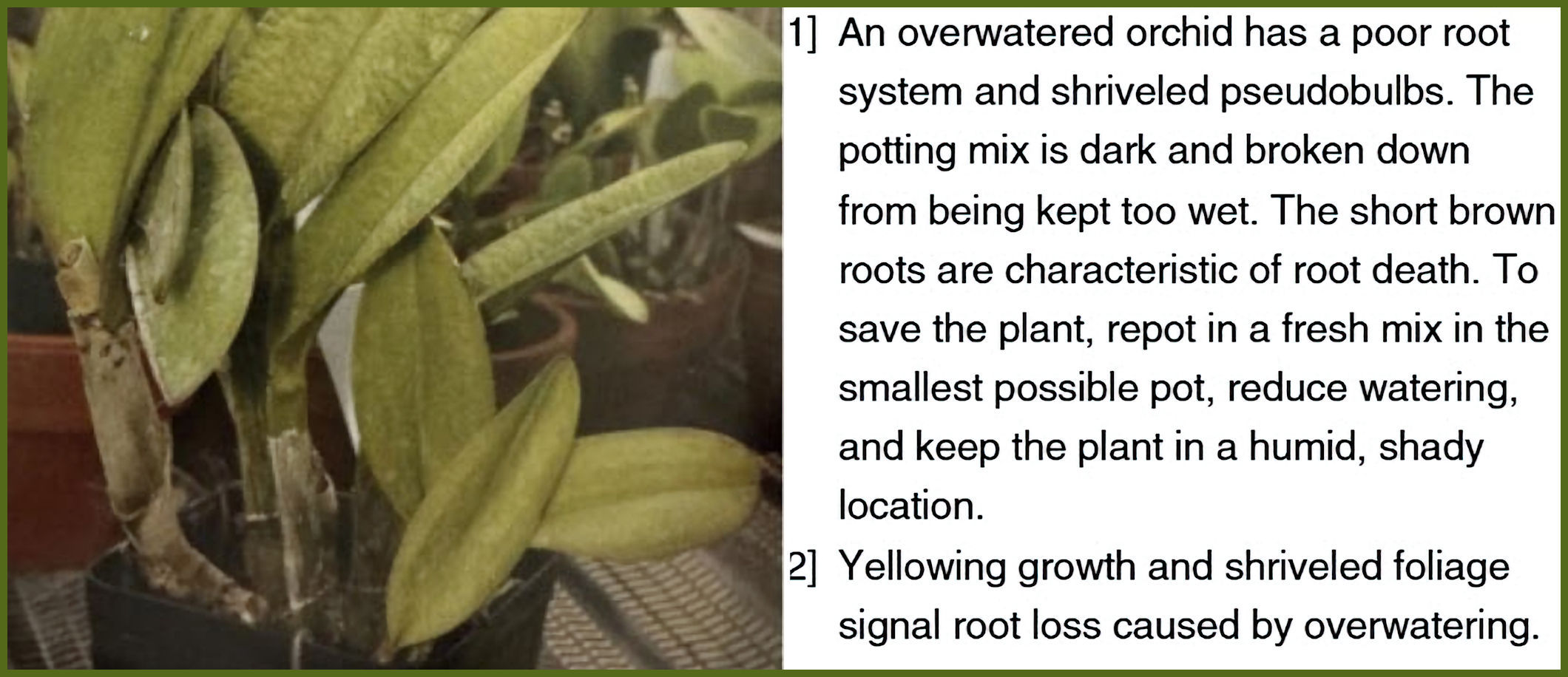
Temperature Differential: A 10–15°F (5–8°C) difference between day and night is essential for health and flowering. Phalaenopsis orchid leaves turning yellow often indicate stress from overwatering (leading to root rot), excessive direct sunlight, or natural aging of lower leaves. To fix it, ensure the orchid is in bright, indirect light, allow the potting mix to dry between waterings, and check for mushy roots. If the leaves are yellow, soft, and the base is mushy, the roots may be dying from too much water, causing nutrient deficiencies. |
Fall 2025:
|
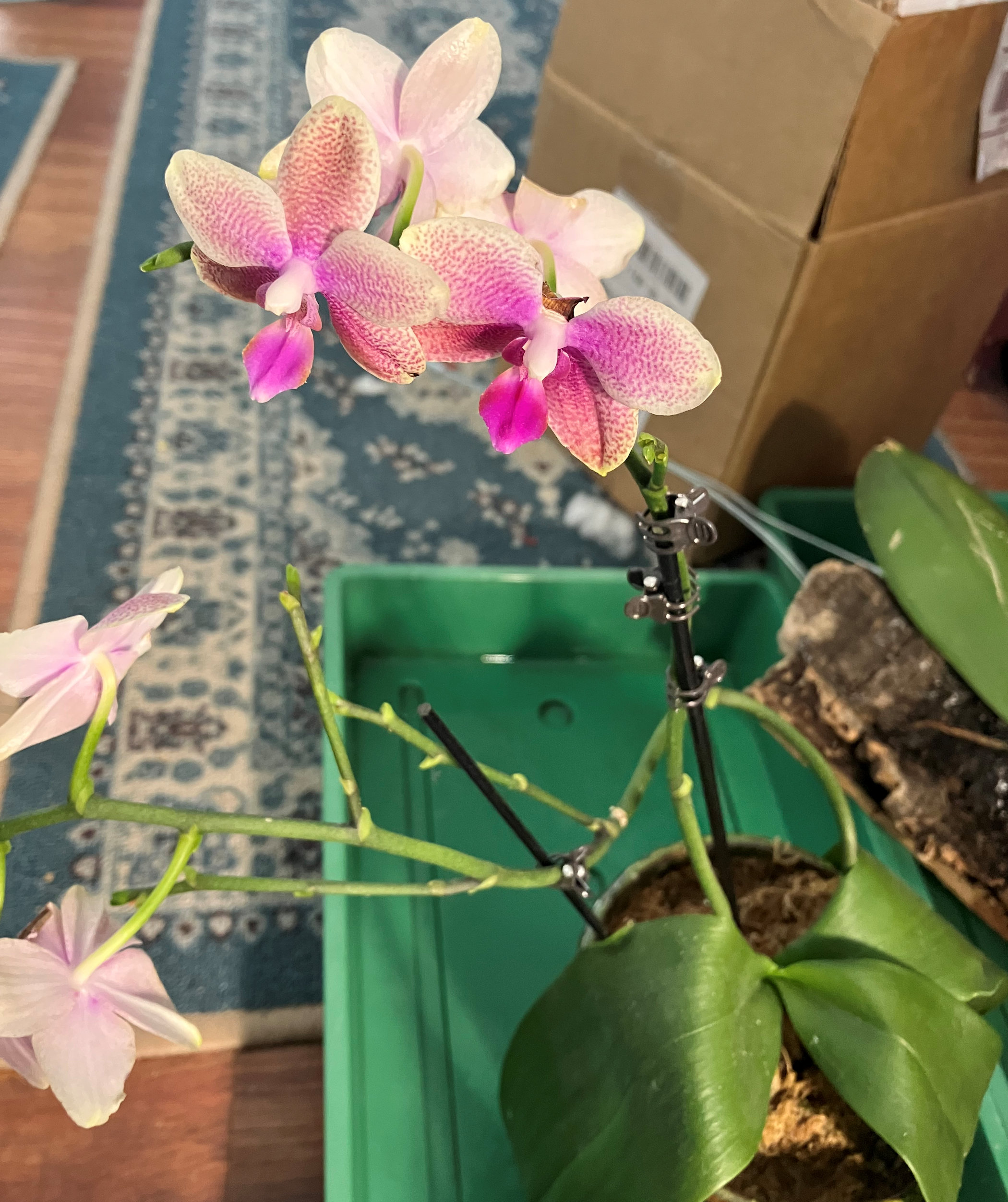
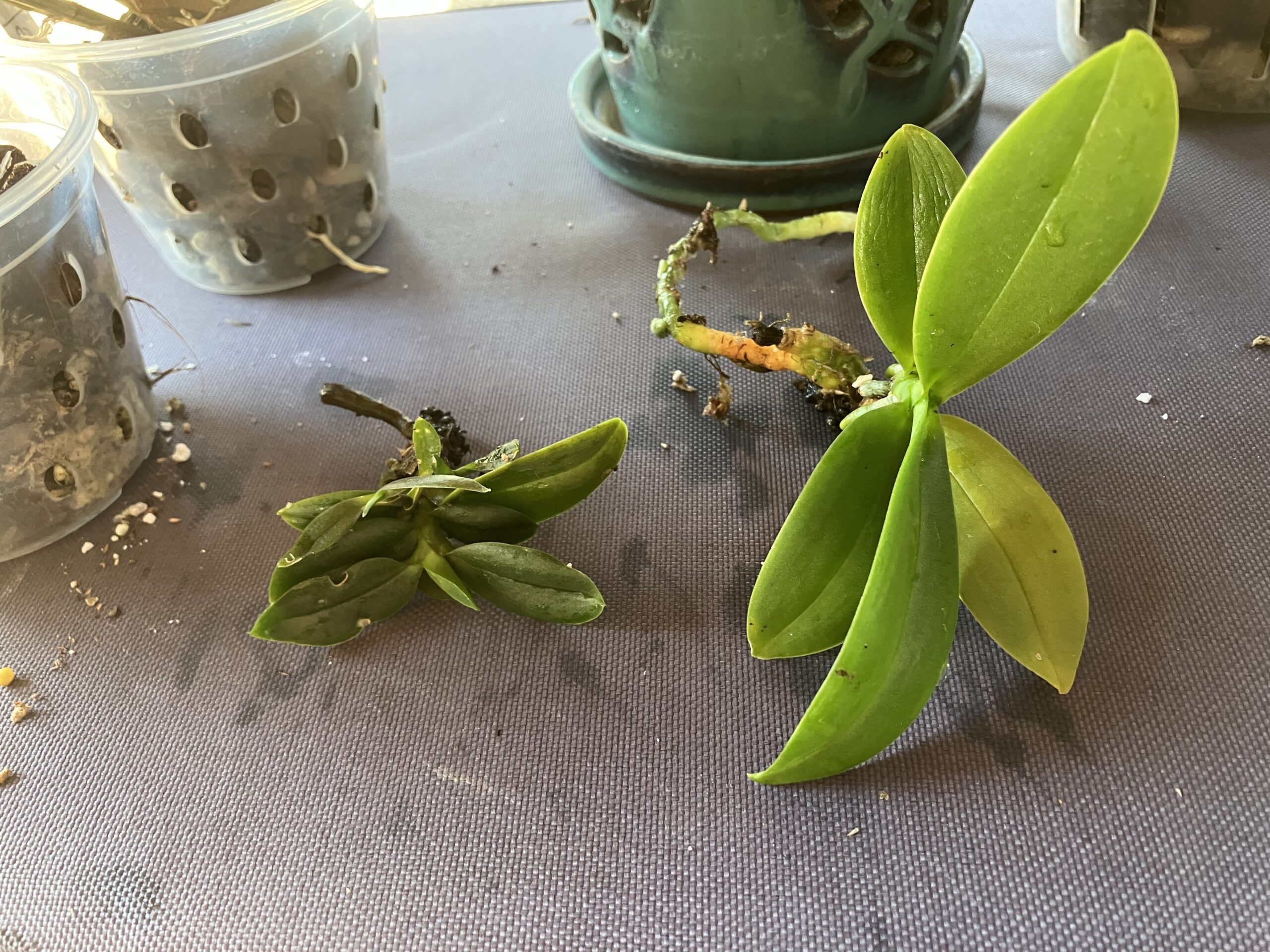
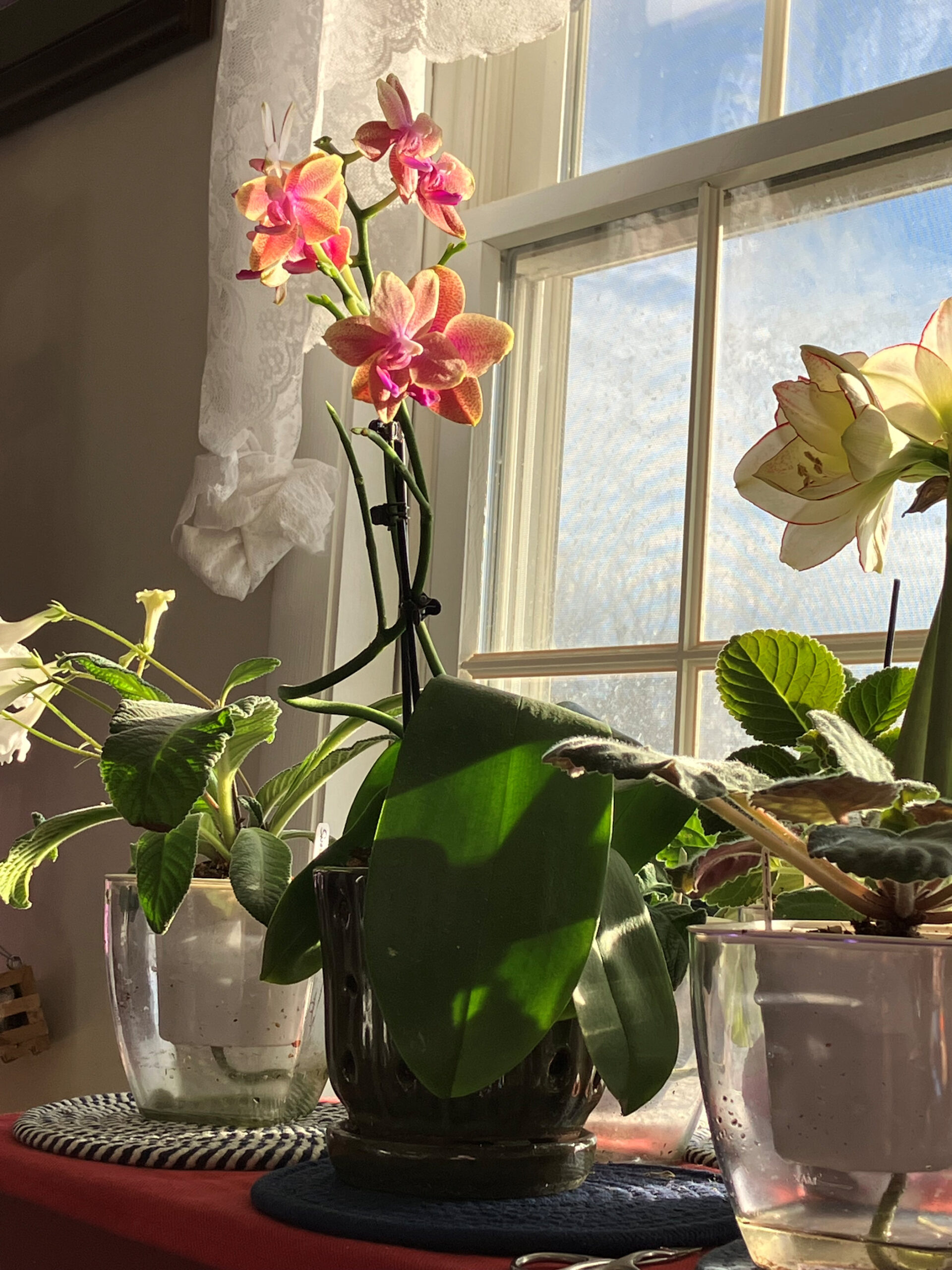 Phalaenopsis orchid, purchased from Amazon, received Nov 21st, 2025. Received blooming, 2 stems, nice healthly large leaves. Salmon color inner flowers with yellowing edge tinting. The Moth orchid is the most common orchid due to its ease of production and the ability to force it to bloom year-round. Phals are easily grown in the home and stay in bloom for a very long time. A mature phal will be in bloom much of the year with graceful inflorescences loaded with good-sized blooms. From pure whites to unusual spotted harlequins, phals are sure to please. Received in good health, blooming. About 24-inches high. Nice looking white 3-inch pot but decided to repot into 5-inch dark green, open sided cermanic orchid pot with moss. Seems quite happy in the pot. Do not be dismayed by the (often sudden) dropping of Phalaenopsis blooms as spring turns to summer. This is the time of year we expect Phalaenopsis to drop their blooms and begin their growth season. We expect them to spike again when they notice the chill of early fall and bloom in the winter or spring. Since Phalaenopsis orchids remain in bloom for a large percentage of the year it is best to seize the opportunity to repot them right after they finish blooming. Phalaenopsis, especially the younger ones, typically thrive on repotting. Fresh orchid mix is essential for fresh new growth. To demonstrate the repotting process, we offer a step-by-step clinic on repotting as well as a Phalaenopsis repotting video. Growing a strong orchid that will rebloom requires growing a strong root system. The leaves of an orchid may look nice but if it does not have a robust root system it will not readily reboom and thrive. Since Phalaenopsis are epiphytes (air plants) they would rather be hanging on to a tree in a jungle than be in a pot. When potted it is critical that the orchid roots be able to breathe. This makes the selection of a top quality orchid mix of the utmost importance. Don’t be fooled by generic orchid mixes sold at hardware stores. When it comes to orchid mixes, quality and freshness really matter. Once you see for yourself the difference a fresh mix from the highest quality ingredients makes compared to store brands you won’t ever want to go back to those inferior mixes again. Many Phalaenopsis are sold potted in Sphagnum moss and often times the moss is very tightly packed around the roots to help the plants hold moisture as they are transported for sale. Once in our homes, however, the tightly packed moss often retains too much moisture. Seeing that the orchid is not drying out the tendency is to repot it into a mix sold in the big box stores right next to the orchids. Unfortunately, these mixes are often times made from fir bark and peat moss. Phalaenopsis, however, dislike moving into fir bark mix when they were used to sphagnum resulting in additional stress. The problem is not the fact that an orchid is potted in moss, the problem is how tightly the moss is packed for the orchid’s new growing conditions. |
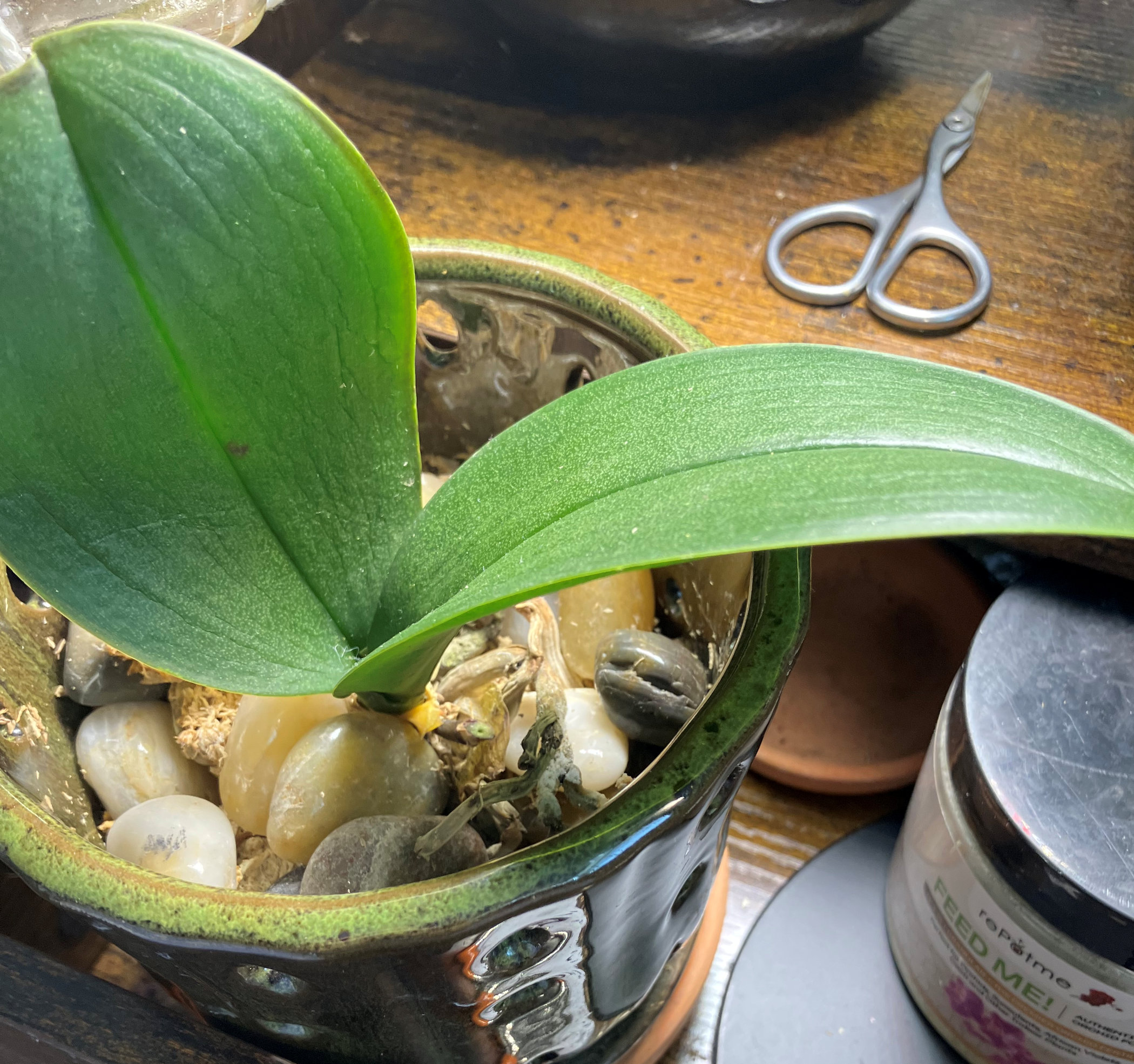
Purchased three orchids from Amazon Nov-Dec 2025. Arrived blooming with lots of blooms. Nice looking plants. January one of the orchids finished blooming and then snapped off at the dirt line. Tossed this one out. Other two continued blooming into February.
|